
Executive Summary
In an increasingly digital and competitive marketplace, brands must evolve beyond traditional marketing approaches. This whitepaper explores the emerging field of sonic branding, demonstrating how strategic audio design can create powerful and emotionally resonant brand experiences.
1. The Evolution of Sonic Branding Historical Context
The landscape of brand communication has shifted dramatically. Before 2010, sonic branding was considered a peripheral marketing tactic. However, recent data shows a significant increase in sonic logo development across various industries.
Key Observations:
- 300% increase in sonic logo creation since 2010
- Expansion across multiple industry sectors
- Shift from decorative to strategic audio branding
Expert Insight: “Sound is no longer an afterthought. It’s a critical tool for building brand connections and emotional engagement.” – Valentin Fleur, CCM Son
2. Sonic Branding: Strategic Foundations Defining Sonic Branding
Sonic branding is the strategic development of a brand’s audio identity, encompassing:
- Sonic logos
- Brand music libraries
- Consistent audio experiences
- Emotional sound design
Core Objectives:
- Create emotional resonance
- Enhance brand recognition
- Influence consumer behavior
- Develop multi-sensory brand experiences
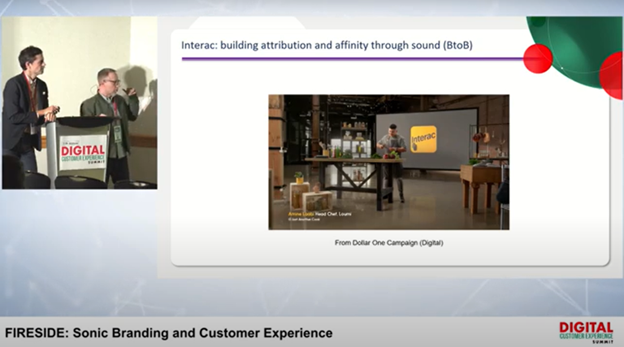
3. Case Study: Interac’s Sonic Branding Journey Transformation Approach
Interac’s sonic branding strategy demonstrates a comprehensive approach to audio identity development:
Stages of Development:
Stage 1: Brand value analysis
Stage 2: Competitive audio landscape research
Stage 3: Sonic identity creation
Stage 4: Flexible music library development
Stage 5: Cross-campaign implementation
Campaign Highlights:
- Holiday Shopping Campaign: High-energy, Gen Z-focused audio
- B2B Verification Campaign: Professional, subtle sonic approach
- Side Hustle Campaign: Inspirational, empowering melody
4. The Science of Sound: Behavioral Insights
Behavioral Research Findings:
The “Sound Shopping” campaign revealed critical insights into the psychological impact of audio.
Quantitative Outcomes:
- 38% reduction in impulse spending
- Increased consumer mindfulness
- Enhanced brand perception
Psychological Mechanisms:
- Sound can modify cognitive processing
- Audio triggers emotional and rational responses
- Strategic sound design influences decision-making
5. Implementation Strategies Developing a Sonic Brand Identity
Recommended Framework:
- Conduct a comprehensive brand analysis
- Define core brand values
- Develop audio mood boards
- Create flexible sonic DNA
- Test across multiple platforms
- Implement consistently
Critical Considerations:
- Maintain brand authenticity
- Ensure cross-platform flexibility
- Balance emotional and functional communication
6. Future of Sonic Branding
Emerging Trends:
- Increased integration with digital platforms
- AI-driven personalized audio experiences
- Expansion into voice and interface design
Technology Implications:
- Voice assistants
- Augmented reality experiences
- Personalized audio interactions
7. Practical Recommendations For Brand Leaders:
- Invest in strategic audio design
- Develop comprehensive sonic guidelines
- Train marketing teams in audio branding
- Continuously test and iterate
Investment Perspective
Sonic branding represents a strategic investment in:
- Brand differentiation
- Emotional connection
- Customer engagement
- Long-term brand equity
Conclusion
Sonic branding is not just a trend but signifies a fundamental shift in brand communication. Organizations that embrace strategic audio design will lead in customer engagement and brand perception.
“Sound is the new visual. Brands that understand this will win the future of marketing.” – Matt Houghton, Interac
Key Takeaways
Sound is a Strategic Asset
- Sonic branding goes beyond background music.
- It creates emotional connections.
- It differentiates brands in competitive markets.
Multi-Sensory Brand Experience
- Consumers engage through multiple channels.
- Audio triggers deeper emotional responses.
- It increases brand memorability.
Behavioral Impact of Sound
- It is scientifically proven to influence consumer decisions.
- Audio can modify spending habits.
- It creates conscious consumer experiences.
Consistent Audio Identity
- Develops a recognizable brand signature.
- Reduces marketing production complexity.
- Enables flexible brand communication.
Digital Ecosystem Integration
- It is critical for modern marketing platforms.
- Adapts to emerging media landscapes.
- Supports brand narrative across touchpoints.
Next Steps Checklist:
☐ Review current audio assets
☐ Conduct an internal sonic brand workshop
☐ Develop an initial sonic brand prototype
☐ Test with the target audience
☐ Iterate and refine
Citation
Fleur, V., & Houghton, M. (2024). The Sonic Branding Revolution. Presented at the 2024 DCX Conference.